 |
Online purchases have increased steadily year by year, with a mixture of big time blue chip companies and a plethora of innovative mom and pop sites leading the way.
To get the most out of an ecommerce campaign, there are many techniques and strategies that can be implemented.
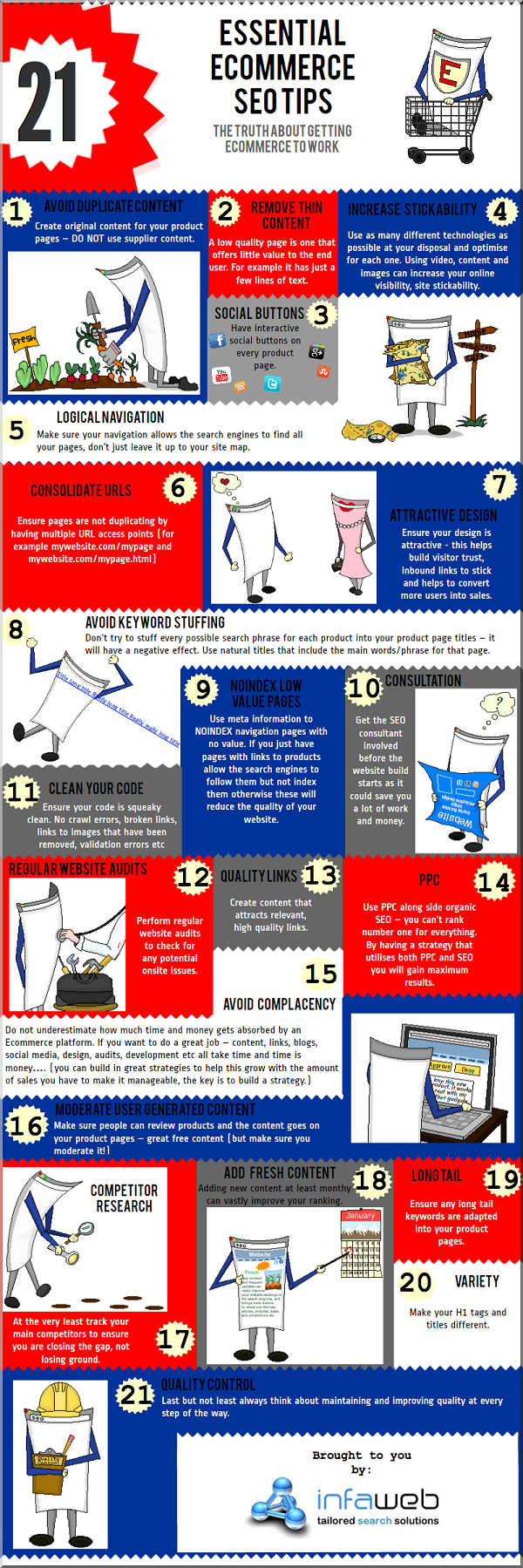
Infaweb have provided a 21 step checklist, in infographic format with sterling advice to help launch any fledgling campaign
1. Create original content
Don’t use cookie cutter text from suppliers; write your own engaging, original content.
2. Weed out thin content
You don’t want low quality pages that don’t give visitors any benefits in viewing them. This means you want more than a couple of lines of text.
3. Add those social buttons
Know the big social networks such as Pinterest, Stumbleupon, Twitter and Pinterest and have interactive buttons people can use to share content on all of your product pages.
4. Work on visibility
Do everything you can to increase your stickability, whether through colourful images, stimulating content, or creative video.
5. Make it easy to navigate
Don’t just trust the site map; put some work into making your site easy for a search engine to spider.
6. Gather your URLs
Get rid of duplicate access points by gathering your URLs.
7. Remember aesthetics
Work to build a site that is easy on the eyes; it’ll get more eyes on your site.
8. Don’t stuff keywords
You don’t need every imaginable search phrase within the page titles of your products, and doing so can actually harm your rankings. Make sure your titles are natural and simple. Think of the reader not the search engines.
9. Use the NOINDEX feature
The NOINDEX feature means using meta information to keep these kinds of pages out of sight. Having useless pages will bring down your site quality.
10. Consult
Look into the services of an SEO consultant before you even start your site, so you’ll start with a good foundation instead of having to change and improve things dramatically down the road.
11. Clean up your site coding
Make sure you have clean code all over your site. This means getting rid of broken links, validation errors, links to removed images, and crawl errors.
12. Audit your site
Frequently look over your site to make sure there aren’t any bugs or issues that everyone is seeing except for you.
13. Forge good links
Your number one goal should be to make content that people want to link to naturally; this will attract relevant links that increase traffic and possibly your page rank.
14. Use PPC
Organic SEO is great, but you should also consider using PPC, simply because it isn’t possible to be number one for every search term, even if you’re a multi billion dollar corporation.
15. Don’t get complacent
A lot of money is spent on e-commerce, as is a lot of time. If you’re looking to stand out from the pack, you need to put effort into social media, blogs, content, development, audits, design, links, content, and more.
16. Moderate content from users
It’s great if you can give people the chance to contribute to your content pages, such as by submitting reviews. However, make sure it’s moderated.
17. Keep up on the competition
Look at what your main competitors are doing and make sure you are catching up to them instead of falling behind.
18. Add new information
New and fresh content is key for good rankings on search engines. Be sure to add updated content at least on a monthly basis.
19. Look for long tails
Check out your long tail keywords and make sure they are integrated into whatever pages you have for your products.
20. Variety is key
Look at your titles and H1 tags, and make sure you mix them up from time to time. Having the exact same H1 and Title can often look spammy.
21. Always be improving
Finally, keep quality in mind no matter what stage of the checklist you’re at. There is always room for improvement, so never stop trying.
21 Essential E-Commerce Tips was commissioned by Infaweb, who are digital marketing specialists based in Scotland.